Why this isn't a normal ticket
The guide requirement is the whole point
The Galápagos National Park has required visitors to be accompanied by a certified naturalist guide at its protected visitor sites for decades. With around 97% of the land protected, there is no self-guided route into the park's landing sites — which is exactly why day tours and cruises, sold through operators, are the standard way in rather than an upsell.
A 'day tour' is a boat to a specific island
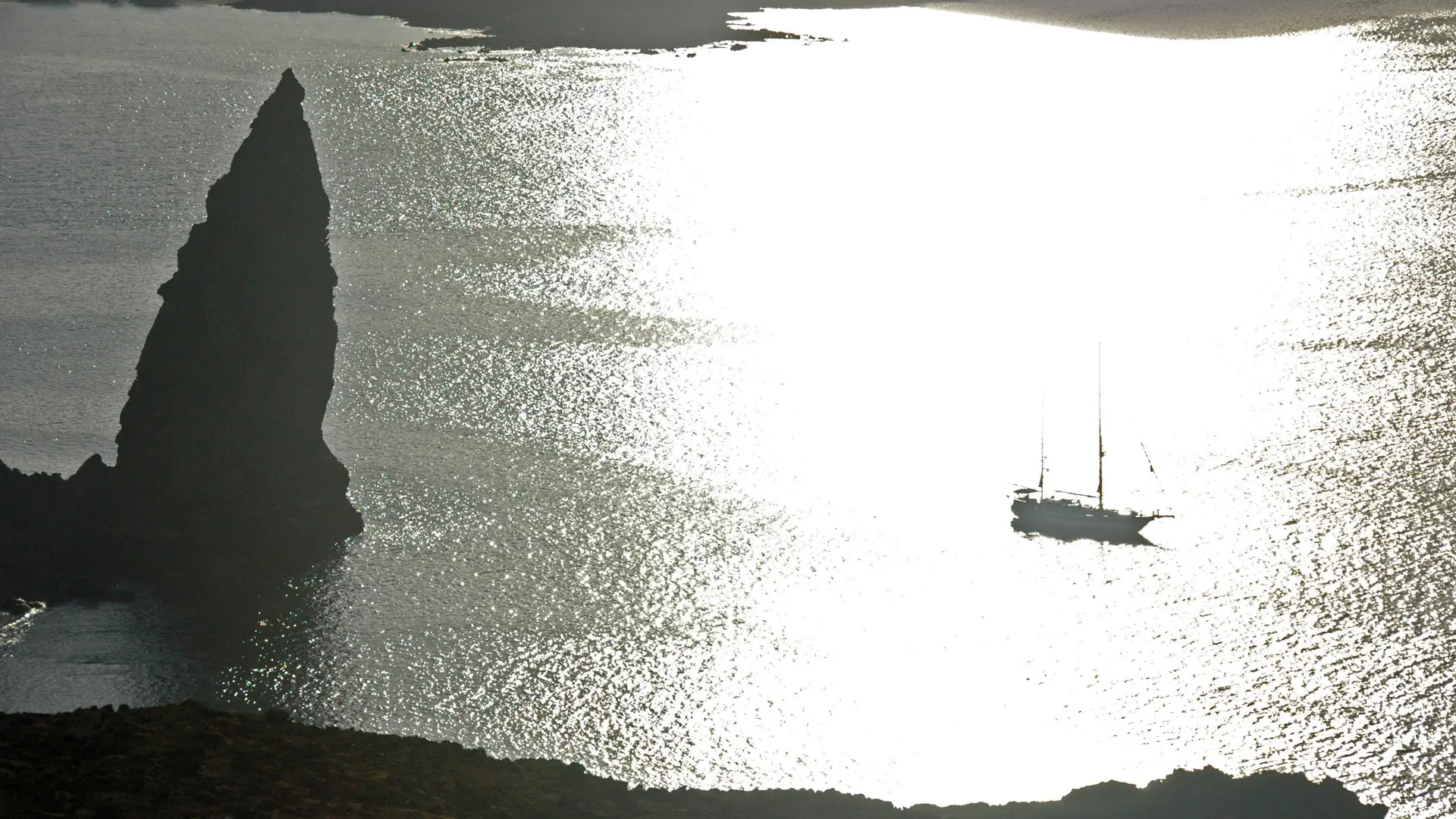
Most Galápagos day tours are guided boat trips departing Santa Cruz or San Cristóbal for a single visitor site — Bartolomé for its volcanic landscape and penguins, North Seymour for frigatebirds and blue-footed boobies, South Plaza or Santa Fé for land iguanas and sea lions. Santa Cruz's own highlands offer land-based tours to wild giant-tortoise reserves and lava tunnels.
Two seasons, one park that never closes
The warm, wet season (December–May) brings calmer, warmer, clearer water and peak nesting; the cool, dry garúa season (June–November) brings cooler, nutrient-rich water and heightened marine activity. Neither closes the park — the choice is about conditions and which wildlife behaviour you want to catch, not about access.
Signature wildlife, and where you actually see it
Latin names shown as a field guide would; the islands listed are where each species is most reliably encountered on day tours.
-
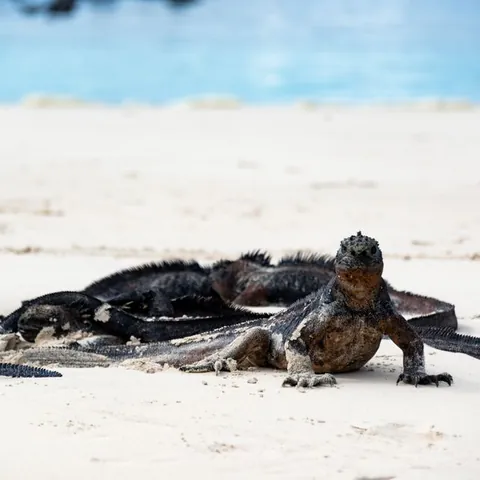 Marine iguana Amblyrhynchus cristatus
Best day-tour sites: Española, Fernandina, South Plaza, Santa Cruz
The only lizard on Earth that forages in the sea, basking on black lava between dives.
-
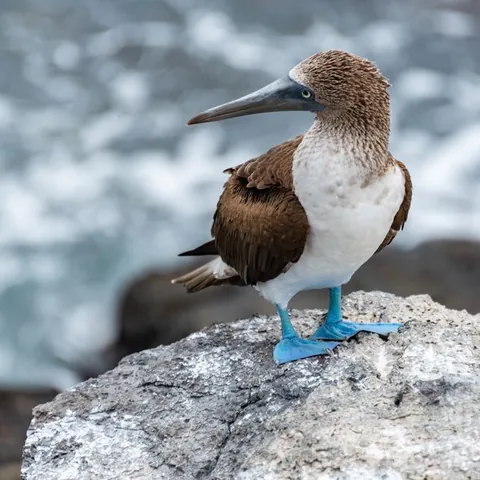 Blue-footed booby Sula nebouxii
Best day-tour sites: North Seymour, Española
The high-stepping courtship dance that shows off those blue feet is most active in the cooler months.
-
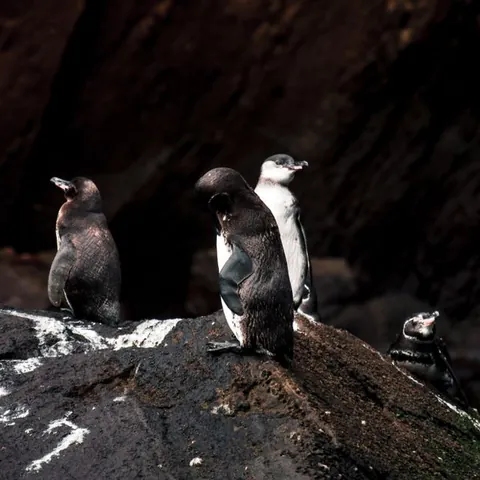 Galápagos penguin Spheniscus mendiculus
Best day-tour sites: Bartolomé (Pinnacle Rock)
The only penguin species living at the equator, often seen while snorkelling off Pinnacle Rock.
-
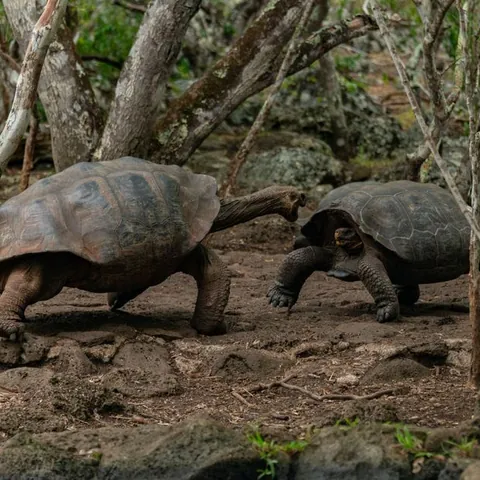 Galápagos giant tortoise Chelonoidis porteri
Best day-tour sites: Santa Cruz highlands
Seen wild and free-roaming in the highland reserves — not only at captive breeding centres.
-
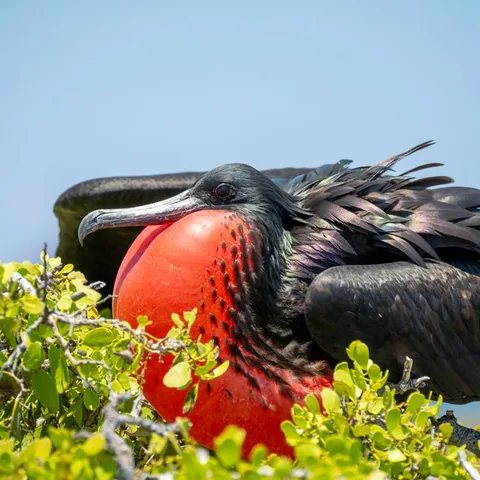 Magnificent frigatebird Fregata magnificens
Best day-tour sites: North Seymour
Breeding males inflate a vivid scarlet throat pouch to display, most visibly in colony season.
-
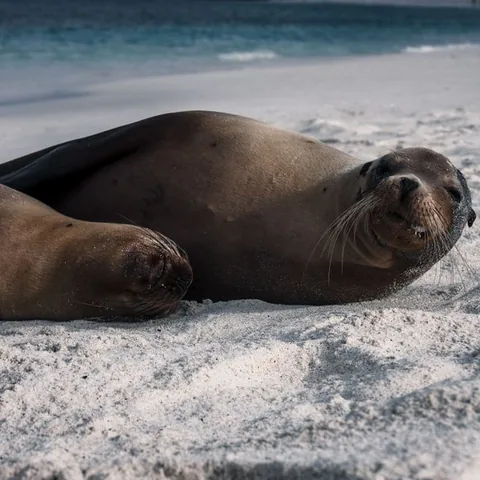 Galápagos sea lion Zalophus wollebaeki
Best day-tour sites: Shore and bay sites throughout
Hauls out on beaches and jetties across nearly every inhabited island, often within metres of visitors.
Day tours, wildlife & season guides
The rule that shapes everything
Do you need a guide in the Galápagos? Yes — here's why
The single fact that determines how every visitor experiences the islands, and what you can still do on your own.
Read the guide →Day tours or a cruise
Galápagos day tours vs a cruise — which to choose
Land-based island-hopping or a liveaboard — the real trade-off in access, cost and comfort.
Read the guide →Island by island
The best Galápagos day trips from Santa Cruz
Santa Cruz is the hub — here are the day-tour islands within reach and what each one is actually for.
Read the guide →Where to see what
Galápagos wildlife by island — where to see what
The signature species mapped to the day-tour sites where you're most likely to actually encounter them.
Read the guide →When to go
The best time to visit the Galápagos
Two seasons, no bad time — the choice is about water, weather and which wildlife behaviour you want to catch.
Read the guide →What a trip actually costs
Galápagos entry fees and what a trip actually costs
The park fee doubled in 2024 — here's what's a fixed government charge and what's genuinely up to you.
Read the guide →Questions people actually ask
Do you need a guide to visit the Galápagos?
Yes — at the national park's visitor sites you must be accompanied by a park-certified naturalist guide, a requirement that has been in place for decades. You can walk freely around the inhabited towns, but reaching the landing sites where the famous wildlife is means joining a guided day tour or a cruise.
How much is the Galápagos entrance fee?
The national park entrance fee for foreign adults is US$200, effective August 2024 (up from US$100 previously), collected on arrival at the airport. There is also a transit control card of around US$20 per person. These are government charges, entirely separate from the price of any tour.
Can you do the Galápagos as day trips instead of a cruise?
Yes. Island-based day tours run from the main towns on Santa Cruz and San Cristóbal to visitor sites like Bartolomé, North Seymour, South Plaza and Santa Fé, plus land-based highland tours on Santa Cruz. It's a genuine alternative to a liveaboard cruise — the day-tours-vs-cruise guide below breaks down the trade-off.
What's the best time to visit the Galápagos?
It's a year-round destination. The warm, wet season (December–May) has calmer, warmer and clearer water that's better for snorkelling, plus peak nesting activity. The cool, dry garúa season (June–November) has cooler, nutrient-rich water and more intense marine activity. Neither closes the park.
Where do you see marine iguanas, blue-footed boobies and giant tortoises?
Marine iguanas bask on the lava at sites like South Plaza, Española and Fernandina; blue-footed boobies and frigatebirds nest on North Seymour; and wild giant tortoises roam the Santa Cruz highlands. The wildlife-by-island guide below maps each signature species to the day-tour sites where it's most reliably seen.
Is it true you can't explore the islands on your own?
Within the national park, effectively yes — around 97% of the archipelago is protected, and its visitor sites require a certified guide. What you can do independently is explore the inhabited towns (Puerto Ayora, Puerto Baquerizo Moreno), some nearby public beaches and a handful of freely accessible spots, but the marquee wildlife sites are guided-access only.
- Cancellation terms upfront Every listing states its full policy before you pay
- Secure checkout You book and pay on Viator's protected platform
- No markup from us You pay Viator's own price — we earn a commission, not a fee
- Independent guide We research the options and link to current listings; we don't sell the tickets